Global Introduction
Bachelor of Computer Applications (BCA) is a globally recognized undergraduate degree program designed to build strong technical knowledge, analytical thinking, and practical skills in the field of computer science and information technology. In today’s rapidly evolving digital world, almost every industry depends on software systems, web applications, data management, and intelligent technologies such as artificial intelligence and machine learning. Because of this, the demand for highly skilled IT professionals is increasing at both national and international levels.
BCA Ultimate Balanced Guide 2026
Bachelor of Computer Applications (BCA) is a globally recognized undergraduate degree program designed to build strong technical knowledge, analytical thinking, and practical skills in the field of computer science and information technology. In today’s rapidly evolving digital world, almost every industry depends on software systems, web applications, data management, and intelligent technologies such as artificial intelligence and machine learning. Because of this, the demand for highly skilled IT professionals is increasing at both national and international levels.
This guide is designed to provide a balanced, detailed, and SEO-optimized explanation of all semesters and subjects, including theory subjects, mathematics subjects, and practical programming subjects. Each subject includes a strong introduction, detailed definition (around 200 words), and clear objectives. Additionally, every semester includes revision strategies, study tips, and daily routines to help students maintain consistency and improve performance.
If students follow this structured approach with discipline and regular practice, they can easily achieve academic excellence, build strong technical skills, and compete successfully at an international level in the IT industry.
Objectives of This Guide (Expanded Version)
- To provide complete semester-wise understanding of BCA subjects
- To include theory, mathematics, and practical subjects equally
- To explain each subject with clear and detailed definitions
- To help students build strong programming and logical skills
- To provide revision strategies and study routines
- To prepare students for exams, projects, and careers
- To create an international-level learning roadmap
SEMESTER 1 – FOUNDATION STAGE (BALANCED & DETAILED)
Introduction
Semester 1 is the foundation stage of the BCA program where students are introduced to the basic concepts of computer science, programming, and mathematics. This semester is extremely important because it builds the base for all advanced subjects in later semesters. Students learn how computers work, how programming logic is developed, and how mathematical thinking supports computing. A strong understanding of these concepts helps in learning advanced programming languages and technologies easily. This stage also helps students develop discipline, study habits, and a structured learning approach that is essential for long-term success in the IT field.
Computer Fundamentals
Definition
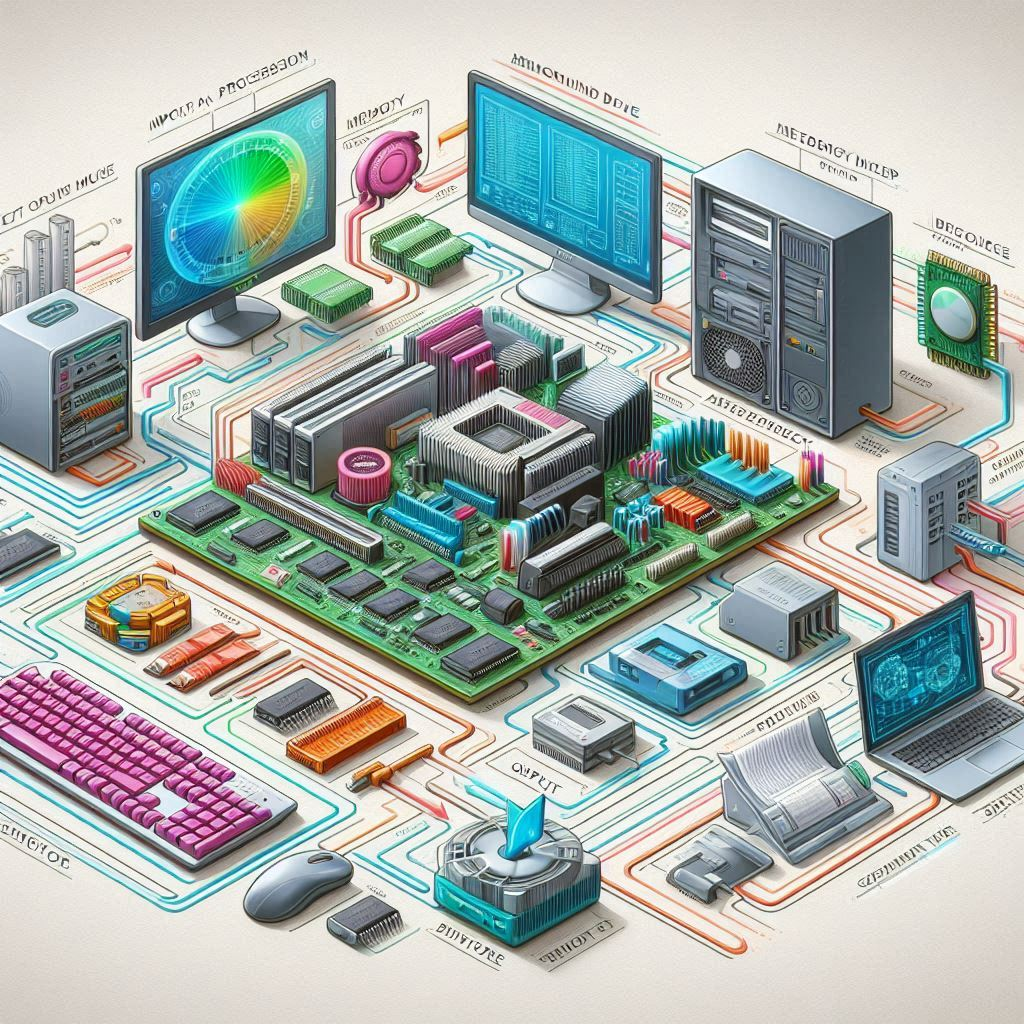
Computer Fundamentals is the study of the basic components, structure, and functioning of a computer system. It explains how computers process data using input, processing, and output cycles. This subject covers hardware components such as CPU, memory, input/output devices, and storage systems. It also introduces software concepts, including system software and application software. Students learn about different types of computers, data representation, and basic operating system functions. This subject provides a clear understanding of how technology works internally and how different components interact. It acts as the foundation for all technical subjects and helps students build confidence in understanding computing systems.
Objectives
- To understand computer architecture and components
- To learn hardware and software interaction
- To understand data processing
- To understand data processing
C Programming (Practical)
Definition
C Programming is a structured programming language that helps students learn coding fundamentals and logical thinking. It introduces variables, data types, operators, loops, and functions. Students write programs to solve problems, which improves their logical and analytical skills. C is widely used in system programming and forms the base for advanced languages. As a practical subject, it requires regular coding practice and debugging skills. Learning C helps students understand memory management and program structure, which is essential for becoming a good programmer.
Objectives
- To develop programming logic
- To write and execute programs
- To understand syntax and structure
- To build coding confidence
Mathematics (Discrete Mathematics)
Definition
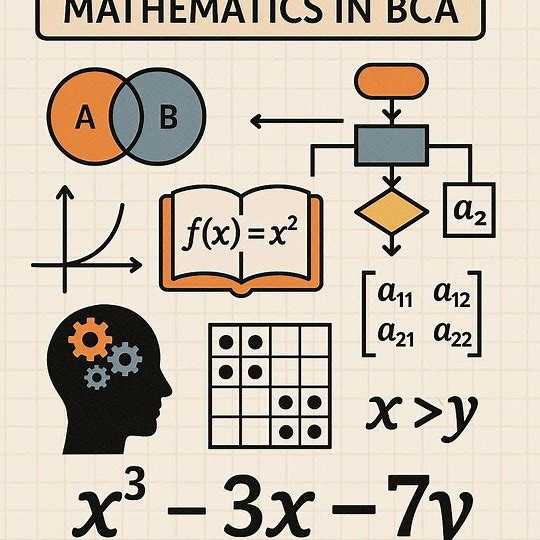
Mathematics in BCA focuses on logical reasoning, analytical thinking, and problem-solving. It includes topics such as sets, relations, functions, and algebra, which are essential for programming and data structures. This subject helps students understand algorithms and computational logic. Mathematics plays an important role in areas like data science, cryptography, and artificial intelligence. It improves reasoning ability and helps students design efficient solutions for complex problems.
Objectives
- To improve logical thinking
- To improve logical thinking
- To develop analytical skills
- To build problem-solving ability
Revision Strategy
- Daily concept revision
- Practice programming
- Use short notes
Tips
- Focus on basics
- Practice daily
- Avoid skipping topics
Routine
- Theory: 2–3 hrs
- Coding: 2 hrs
- Revision: 1 hr
SEMESTER 2 – CORE DEVELOPMENT STAGE
Introduction
Semester 2 plays a crucial role in strengthening the core concepts of computer science that were introduced in the first semester. In this stage, students move beyond basic understanding and start focusing on structured problem-solving, efficient programming techniques, and system-level operations. The subjects in this semester are designed to enhance logical thinking, coding efficiency, and conceptual clarity. Students are introduced to data structures, object-oriented programming, and operating systems, which are essential for real-world software development. This semester builds a strong technical base that supports advanced subjects like database management, networking, and software engineering in later semesters.
Data Structures (Theory + Practical)
Definition
Data Structures is a fundamental subject in computer science that focuses on organizing, storing, and managing data efficiently. It provides different ways to structure data so that it can be accessed and modified easily. Common data structures include arrays, linked lists, stacks, queues, trees, and graphs. Each structure has its own advantages and is used depending on the type of problem being solved. This subject also introduces algorithms that work with these data structures to perform operations like searching, sorting, insertion, and deletion. Understanding data structures is essential for writing optimized and efficient programs. It plays a key role in software development, database management, and system design. This subject improves logical thinking and helps students approach problems in a structured and efficient manner.
Objectives
- To understand different types of data structures
- To learn efficient data organization techniques
- To develop problem-solving skills
- To improve programming logic
- To understand algorithm efficiency
Operating System (Theory)
Definition
An Operating System (OS) is system software that manages computer hardware and software resources and provides services for computer programs. It acts as an interface between the user and the computer system. The OS handles tasks such as process management, memory management, file systems, and device control. It ensures that multiple programs can run efficiently without conflicts. Popular operating systems include Windows, Linux, and macOS. This subject helps students understand how a computer system works internally and how resources are allocated. It also introduces concepts like multitasking, scheduling, and security. A strong understanding of operating systems is essential for system programming, networking, and software development. BCA Ultimate Balanced Guide 2026
Objectives
- To understand system operations
- To learn process and memory management
- To understand file systems
- To improve system-level knowledge
C++ Programming (Practical)
Definition
C++ Programming is an extension of the C language that introduces object-oriented programming (OOP) concepts. It allows developers to create modular, reusable, and efficient programs. Key concepts include classes, objects, inheritance, polymorphism, encapsulation, and abstraction. This subject helps students design structured programs that model real-world problems. C++ is widely used in game development, system software, and high-performance applications. As a practical subject, it requires continuous coding practice, debugging, and project development. It improves logical thinking and helps students transition from basic programming to advanced software development. BCA Ultimate Balanced Guide 2026
Objectives
- To learn object-oriented programming
- To build structured programs
- To improve coding efficiency
- To develop problem-solving skills
- BCA Ultimate Balanced Guide 2026
Mathematics-II (Discrete / Statistics)
Definition
Mathematics-II focuses on advanced mathematical concepts used in computing, such as probability, statistics, logic, and combinatorics. These concepts are essential for data analysis, algorithms, and artificial intelligence. This subject enhances analytical thinking and helps students understand patterns and relationships in data. It also supports programming and data structures by providing a mathematical foundation for problem-solving.
Objectives
- To improve analytical thinking
- To support programming logic
- To understand probability and statistics
- To build problem-solving ability
Revision Strategy
- Practice coding daily (Data Structures + C++)
- Revise OS concepts using diagrams
- Solve math problems regularly
Tips
- Focus on logic building
- Practice programs daily
- Use visual learning for OS
Daily Routine
- Theory: 2–3 hrs
- Coding: 3 hrs
- Revision: 1–2 hrs
SEMESTER 3 – INTERMEDIATE TO PROFESSIONAL TRANSITION STAGE
Introduction
Semester 3 is a critical turning point in the BCA journey where students transition from basic programming knowledge to more structured and real-world computing concepts. In this semester, students begin to understand how software systems are designed, how databases are managed efficiently, and how computer networks enable communication between systems across the world. The focus shifts from only writing programs to understanding how data is stored, processed, and transmitted securely. This stage is extremely important for building a strong foundation in backend technologies, system design, and application development. Students also improve their logical thinking, coding efficiency, and analytical abilities, which are essential for higher semesters and professional careers in the IT industry. BCA Ultimate Balanced Guide 2026
Database Management System (DBMS)
Definition
Database Management System (DBMS) is a software system that allows users to efficiently store, organize, retrieve, and manage large amounts of data in a structured format. It plays a crucial role in modern computing where data is considered one of the most valuable assets. DBMS uses tables, rows, and columns to represent data, making it easier to access and manipulate information using Structured Query Language (SQL). It ensures data integrity, security, and consistency while supporting multiple users simultaneously. DBMS also provides features such as data backup, recovery, and transaction management, which are essential for reliable system performance. It is widely used in applications like banking systems, e-commerce platforms, social media, and enterprise software. Understanding DBMS helps students design efficient databases, optimize queries, and manage large-scale data systems effectively.
Objectives
- To understand the concept of databases and data organization
- To learn SQL queries for data manipulation and retrieval
- To design efficient database schemas
- To ensure data security and integrity
- To understand normalization and transaction management
- To prepare for real-world database applications
Computer Networks
Definition
Computer Networks is the study of how computers and devices communicate with each other through wired and wireless connections. It involves the exchange of data using protocols, transmission media, and network devices such as routers and switches. Networks can be classified into different types like LAN, WAN, and MAN depending on their size and coverage. This subject explains how data is transmitted in packets, how errors are handled, and how communication is secured. It also covers important models like the OSI model and TCP/IP model, which define how network communication works in layers. Computer networks are the backbone of the internet, enabling global communication and data sharing. Understanding networking is essential for careers in system administration, cybersecurity, and cloud computing.
Objectives
- To understand network fundamentals and types
- To learn communication protocols
- To understand data transmission and security
- To analyze network performance
- To build basic networking knowledge
Java Programming (Practical)
Definition
Java Programming is a high-level, object-oriented programming language widely used for building web, mobile, and enterprise applications. It is platform-independent, meaning programs written in Java can run on any system using the Java Virtual Machine (JVM). This subject introduces advanced object-oriented concepts such as inheritance, polymorphism, abstraction, and encapsulation in depth. Java also supports exception handling, multithreading, and graphical user interfaces, making it a powerful language for real-world development. As a practical subject, students write programs, develop mini-projects, and learn debugging techniques. Java plays a key role in Android development, enterprise software, and backend systems, making it an essential skill for modern developers.
Objective
- To master object-oriented programming concepts
- To build real-world applications
- To improve coding and debugging skills
- To improve coding and debugging skills
- To understand advanced programming features
- BCA Ultimate Balanced Guide 2026
Mathematics-III (Advanced Logic & Computing Math)
Definition
Mathematics-III focuses on advanced mathematical concepts that support computing, algorithms, and data processing. It includes topics such as graph theory, matrices, probability, and logic systems. These concepts are widely used in fields like data science, machine learning, and algorithm design. This subject enhances analytical thinking and helps students understand complex computational problems. It provides a strong mathematical foundation for designing efficient algorithms and solving real-world problems in computing.
Objectives
- To improve logical reasoning and analytical thinking
- To support algorithm design
- To understand mathematical models in computing
- To understand mathematical models in computing
Revision Strategy
- Practice SQL queries daily
- Practice SQL queries daily
- Code Java programs regularly
- Solve math problems
- Tips
- Focus on concepts + practice
- Use real-world examples
- Avoid rote learning
Routine
- Theory: 2–3 hrs
- Coding: 3 hrs
- Coding: 3 hrs
SEMESTER 4 – ADVANCED SYSTEM DESIGN & DEVELOPMENT STAGE (FULL EXTENDED)
Introduction
Semester 4 is one of the most important phases in the BCA program where students move into advanced-level understanding of software development, system design, and real-world application building. At this stage, students are no longer beginners; they are expected to think like developers and problem solvers. This semester focuses on how software is created professionally, how databases are optimized, and how modern web applications are designed and deployed. It bridges the gap between theoretical knowledge and practical implementation by introducing structured development approaches, advanced database techniques, and interactive web technologies. Students also start working on small real-world projects, which help them understand industry requirements and user expectations. Mastering this semester builds confidence and prepares students for specialization subjects in the upcoming semesters like cybersecurity, cloud computing, and artificial intelligence.
Software Engineering (Theory)
Definition
Software Engineering is a disciplined and systematic approach to the development, operation, and maintenance of software systems. It focuses on applying engineering principles to software creation in order to produce high-quality, reliable, and scalable applications. The subject introduces the Software Development Life Cycle (SDLC), which includes phases such as requirement gathering, system design, coding, testing, deployment, and maintenance. Each phase plays a critical role in ensuring that the final product meets user requirements and functions efficiently. Software engineering also emphasizes documentation, teamwork, and project management, which are essential in real-world software development environments.
Objectives
- To understand the complete software development life cycle
- To learn structured and professional development methods
- To improve project planning and management skills
- To understand software testing and quality assurance
- To develop teamwork and documentation skills
- To prepare for real-world software development environments
Advanced Database Management System (Advanced DBMS)
Definition
Advanced DBMS is an extension of basic database concepts that focuses on improving database performance, security, and scalability. It introduces advanced topics such as normalization, indexing, transaction management, concurrency control, and database security. Normalization helps in reducing data redundancy and improving data integrity, while indexing improves the speed of data retrieval. Transaction management ensures that database operations are executed reliably, even in the case of system failures.
This subject also explains concurrency control mechanisms that allow multiple users to access the database simultaneously without causing conflicts or inconsistencies. Security is another important aspect, where students learn how to protect data from unauthorized access using authentication and authorization techniques. Advanced DBMS is widely used in large-scale applications such as banking systems, e-commerce platforms, and enterprise resource planning systems. Understanding these concepts helps students design efficient and secure databases capable of handling large volumes of data.
Objectives
- To understand advanced database optimization techniques
- To ensure data consistency and integrity
- To learn transaction and concurrency control
- To improve database performance
- To implement database security mechanisms
Web Development (Practical – Frontend + Basics of Backend)
Definition
Web Development is the process of creating websites and web applications that run on browsers. It includes frontend development, which focuses on user interface design using HTML, CSS, and JavaScript, and backend development, which handles server-side logic and database interaction. In this subject, students learn how to design responsive and interactive web pages that provide a smooth user experience across different devices.
Students also learn about DOM manipulation, event handling, and basic API integration using JavaScript. Modern web development emphasizes responsive design, which ensures that websites work properly on mobile devices, tablets, and desktops. This subject is highly practical and requires continuous hands-on practice. By the end of the course, students can create fully functional websites and basic web applications, which are essential skills for freelance work and professional development careers.
Objectives
- To design responsive and interactive websites
- To learn frontend technologies (HTML, CSS, JS)
- To build real-world web projects
- To improve UI/UX design understanding
- To develop practical development skills
Revision Strategy (Extended)
- Weekly revision of SDLC concepts and diagrams
- Practice SQL queries and database design daily
- Build at least 1 mini web project every 2 weeks
- Create short notes for quick revision
- Solve previous year question papers
Advanced Tips
- Focus on practical implementation more than theory
- Use GitHub for storing projects
- Learn debugging and testing properly
- Build portfolio websites
Daily Routine (Optimized)
- Theory: 2 hours
- Practical (Web + DB): 3–4 hours
- Revision: 1–2 hours
SEMESTER 5 – INDUSTRY SPECIALIZATION STAGE (ULTRA EXTENDED)
Introduction
Semester 5 is the stage where students move closer to industry-level expertise and start focusing on specialized domains in computer science. This semester is highly important for career planning because it introduces modern and in-demand technologies such as cybersecurity, cloud computing, and artificial intelligence. Students begin to understand how real-world systems are secured, how scalable applications are deployed on cloud platforms, and how intelligent systems are built using data. This semester encourages students to explore their interests and choose a specialization area for their future careers. Practical implementation and project-based learning play a key role in this stage, helping students gain real-world experience.
Cyber Security
Definition
Cyber Security is the practice of protecting computer systems, networks, and data from digital attacks, unauthorized access, and damage. It involves various techniques such as encryption, firewalls, intrusion detection systems, and authentication mechanisms. With the increasing use of the internet and digital platforms, cybersecurity has become one of the most critical areas in technology.
This subject teaches students about different types of cyber threats, including malware, phishing, ransomware, and hacking attempts. It also explains how vulnerabilities in systems can be identified and fixed to prevent attacks. Cybersecurity professionals work to secure sensitive information, protect user privacy, and ensure safe communication over networks. This field is essential for industries like banking, healthcare, government, and e-commerce.
Objectives
- To understand cyber threats and vulnerabilities
- To implement security techniques
- To protect data and systems
- To learn ethical hacking basics
- To ensure secure communication
Cloud Computing
Definition
Cloud Computing is a technology that provides computing services such as storage, servers, databases, networking, and software over the internet. Instead of maintaining physical infrastructure, organizations use cloud platforms like AWS, Microsoft Azure, and Google Cloud to run applications and store data.
Objectives
- To understand cloud architecture
- To deploy applications on cloud
- To manage cloud resources
- To learn scalability and flexibility
- To reduce infrastructure cost
Python / Artificial Intelligence (Practical)
Definition
Python is a powerful and easy-to-learn programming language widely used in artificial intelligence, machine learning, data science, and automation. It provides libraries like NumPy, Pandas, and TensorFlow, which simplify complex computations and data analysis.
Artificial Intelligence (AI) involves creating systems that can perform tasks that normally require human intelligence, such as decision-making, pattern recognition, and problem-solving. In this subject, students learn how to use Python to build intelligent systems and analyze data. This subject is highly practical and opens opportunities in modern tech fields.
Objectives
- To learn Python programming
- To build AI-based applications
- To analyze data effectively
- To automate tasks
- To explore machine learning basics
Strategy + Routine (Advanced Same Pattern)
SEMESTER 6 – FINAL YEAR + PROJECT + CAREER STAGE (ULTRA EXTENDED)
Introduction
Semester 6 is the final and most crucial stage of the BCA program, where students apply all the knowledge and skills they have acquired throughout the course. This semester focuses on project development, real-world problem-solving, and career preparation. Students work on major projects that demonstrate their technical abilities and creativity. It is also the time to prepare for job placements, internships, and higher studies. This semester plays a key role in shaping the professional future of students.
Major Project (Practical)
Definition
The Major Project is a comprehensive practical assignment that requires students to develop a real-world application using the knowledge and skills gained throughout the BCA program. It involves identifying a problem, designing a solution, implementing the system, and testing its functionality. Projects can include web applications, mobile apps, database systems, or AI-based solutions.
Objectives
- To apply theoretical knowledge in real-world scenarios
- To develop complete software solutions
- To improve problem-solving skills
- To build a professional portfolio
- To prepare for job interviews
Data Science / Artificial Intelligence
Definition
Data Science is the field of analyzing and interpreting large amounts of data to extract meaningful insights. It combines statistics, programming, and domain knowledge to solve complex problems. Artificial Intelligence enhances this process by enabling machines to learn from data and make intelligent decisions.
This subject introduces students to data analysis techniques, visualization tools, and machine learning algorithms. It is widely used in industries like finance, healthcare, marketing, and technology.
Objectives
- To analyze and interpret data
- To build predictive models
- To use machine learning algorithms
- To solve real-world problems
Final Strategy (Career Focused)
- Focus on project completion
- Practice coding daily
- Prepare resume and portfolio
- Apply for internships and jobs
Final Tips
- Build strong GitHub profile
- Learn interview questions
- Practice aptitude + coding
- Stay updated with industry trends
- BCA Ultimate Balanced Guide 2026
1 thought on “BCA Ultimate Balanced Guide 2026: Semester 1 to 6 – All Subjects”