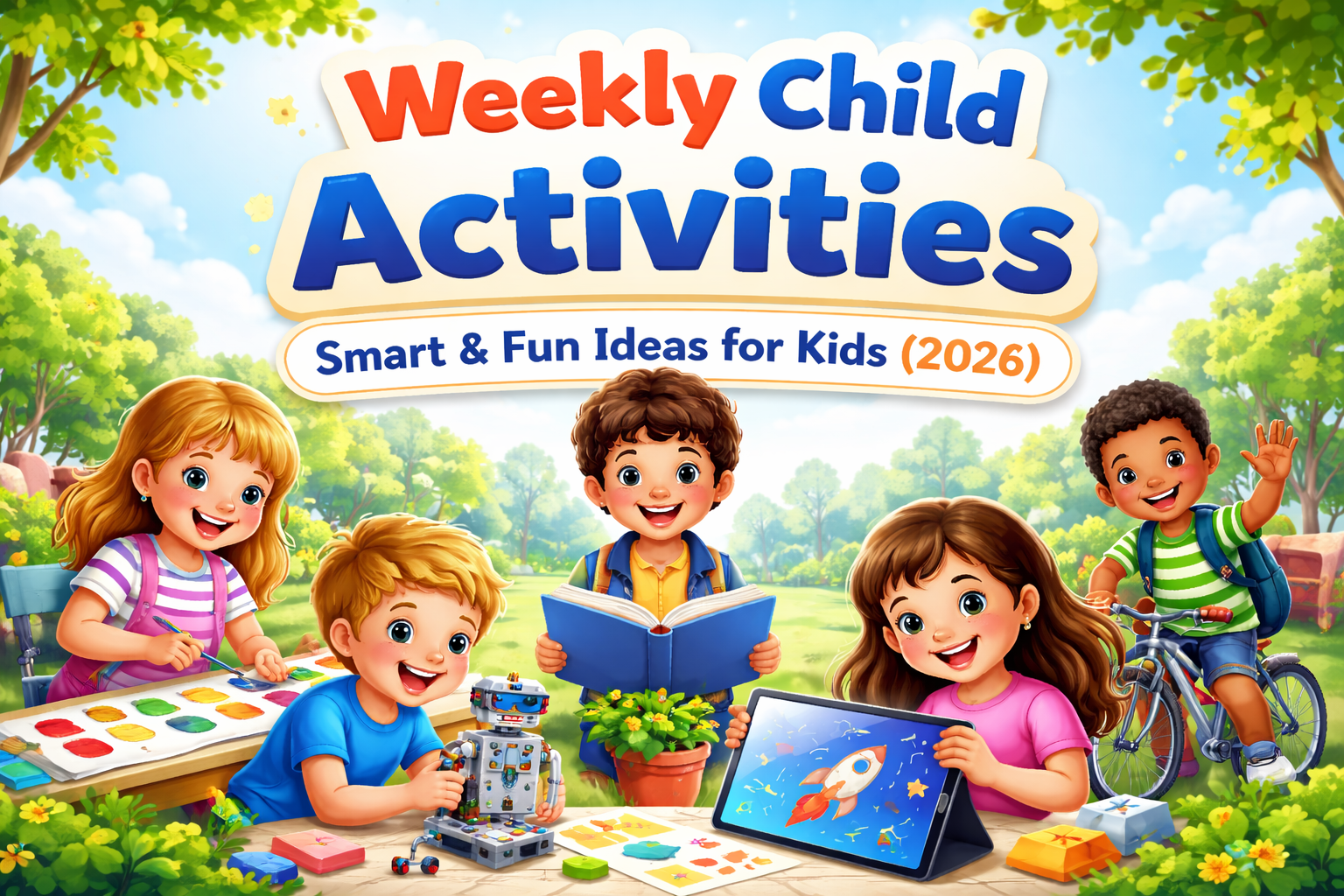
Introduction: Why Weekly Child Activities Matter Today
Weekly Child Activities: Smart In today’s fast-moving digital world, children are growing up surrounded by smartphones, tablets, and constant online entertainment. While technology has its benefits, it also creates a major challenge for parents — keeping children engaged in meaningful, productive, and balanced activities. Many parents often wonder how to manage their child’s daily routine without over-relying on screens. The answer lies in creating a structured weekly activity plan that combines fun, learning, and real-life skill development. A well-planned weekly routine not only keeps children busy but also helps them grow mentally, physically, and emotionally.
The Problem: Unstructured Time and Excessive Screen Use
One of the biggest issues in modern parenting is unstructured time. Weekly Child Activities: Smart
When children do not have a clear plan for their day:
- They get bored easily
- They spend more time on mobile devices
- Their creativity starts decreasing
- Physical activity becomes very limited
This is not just about entertainment — it directly affects a child’s overall development. Instead of actively learning and exploring, children become passive consumers of content.
Why Screen Time Becomes a Habit
Screens are easy, fast, and always available. Without alternative activities:
Kids naturally choose mobile games or videos
Parents often allow it for convenience
Over time, it becomes a daily habit
The real issue is not technology itself, but the lack of structured alternatives. Weekly Child Activities: Smart
The Solution: A Smart Weekly Activity System
To solve this problem, parents need a simple yet effective system — a weekly activity structure. Instead of random daily decisions, each day is assigned a specific type of activity. This creates a balance between:
Creativity
Learning
Physical movement
Social interaction
Relaxation
A structured plan gives children direction while still allowing freedom to enjoy activities.
Importance of Weekly Child Activities
01 Builds Discipline Without Pressure
Children may not like strict rules, but they respond well to routines.
When each day has a theme, they naturally follow it without feeling forced. Weekly Child Activities: Smart
02 Encourages Creativity and Independent Thinking
Activities like drawing, storytelling, and DIY projects help children:
Think creatively
Explore new ideas
Solve problems on their own
In today’s AI-driven world, creativity is more important than memorization.
03 Reduces Unhealthy Screen Time
When children are engaged in fun and meaningful activities, they automatically reduce their screen usage. This approach works better than simply restricting mobile use.
04 Improves Physical and Mental Health
A balanced weekly routine includes both indoor and outdoor activities, which helps:
Improve physical fitness
Reduce stress
Increase focus and energy
Develops Future-Ready Skills
Children today need more than just academic knowledge. They need skills like:

Develops Future-Ready Skills
- Communication
- Creativity
- Adaptability
- Problem-solving
Weekly activities help build these skills naturally.
A Modern Approach to Child Development
Traditional routines are no longer enough. Children today need a modern and flexible approach that blends fun with learning.
A smart weekly activity plan should be:
Simple to follow
Fun and engaging
Skill-oriented
Suitable for real-life situations
This is not about keeping children busy — it is about helping them grow into confident and capable individuals.
What You Will Learn in This Guide
In the next part, we will cover:
Day-by-day activity planning (Monday to Sunday)
Practical activity ideas for each day
Learning benefits of every activity
Modern trends used in US and UK parenting
02. Weekly Child Activities (Monday to Sunday Plan)
Monday – Creative Activities for Kids
Creativity is the foundation of innovation. Starting the week with creative tasks helps children express their ideas and think independently.

Activities to Try
- Drawing and painting
- DIY crafts using paper or waste materials
- Clay modeling
- Story creation through pictures
Learning Benefits
- Improves imagination and creativity
- Builds focus and patience
- Encourages self-expression
03. Extra Activities, Common Mistakes & Final Conclusion
25+ Extra Weekly Child Activity Ideas
Creative Activities

- Paper crafts
- Card making
- DIY toys
- Coloring challenges
- Story drawing

Learning Activities
- Flashcards learning
- Word games
- Simple math games
- Reading challenges
- Quiz competitions
Physical Activities
- Skipping rope
- Hide and seek
- Running races
- Dance sessions
- Mini workouts
Social Activities
- Role play (teacher, doctor, shopkeeper)
- Group storytelling
- Family discussion time
- Helping parents
- Team games
Skill-Based Activities
- Gardening
- Cooking basics
- Cleaning room
- Time management tasks
- Basic digital skills
How to Use These Activities Effectively
A good plan is simple and flexible.
Best Approach
Choose 1 main activity per day
Add 1 small fun task
Keep total time between 30–60 minutes
This keeps children engaged without feeling overloaded.
Common Mistakes to Avoid
01. Overloading the Schedule
Too many activities can make children lose interest.
02. Forcing Activities
Kids should enjoy activities, not feel pressured.
03. Ignoring Interests
Always consider what the child likes.
04. Replacing Everything with Screens
Balance is important — not complete restriction.
In today’s fast-changing world, children need more than just academic learning. They need a balanced lifestyle that includes creativity, physical activity, emotional development, and real-life skills.
A structured weekly activity plan helps children:

- Stay active and healthy
- Think creatively
- Build confidence
- Develop important life skills
The goal is simple:
Not just to keep children busy, but to help them grow into smarter, happier, and more capable individuals.